JACK KEROUAC – AN OBITUARY
October 22, 1969
By JOSEPH LELYVELD
Jack Kerouac, Novelist, Dead; Father of the Beat Generation
Author of ‘On the Road’ was Hero to Youth–Rejected Middle-Class Values
 ack Kerouac, the novelist who named the Beat Generation and exuberantly celebrated its rejection of middle-class American conventions, died early yesterday of massive abdominal hemorrhaging in a St. Petersburg, Fla., hospital. He was 47 years old.
“The only people for me are the mad ones, the ones who are mad to live, mad to talk, desirous of everything at the same time,” he wrote in “On the Road,” a novel he completed in only three weeks but had to wait seven years to see published.
When it finally appeared in 1957, it immediately became a basic text for youth who found their country claustrophobic and oppressive. At the same time, it was a spontaneous and passionate celebration of the country itself, of “the great raw bulge and bulk of my American continent.”
Mr. Kerouac’s admirers regarded him as a major literary innovator and something of a religious seer, but this estimate of his achievement never gained wide acceptance among literary tastemakers.
The Beat Generation, originally regarded as a bizarre bohemian phenomenon confined to small coteries in San Francisco and New York, spilled over into the general culture in the nineteen-sixties. But as it became fashionable to be beat, it became less fashionable to read Jack Kerouac.
Subject Was Himself
His subject was himself and his method was to write as spontaneously as possible by threading a hefty roll of teletype paper into his typewriter and setting down his story on one continuous sheet. What resulted he would later transcribe for forwarding to his publisher, but never revise, in principle, for he regarded revision as a form of lying.
Truman Capote called Mr. Kerouac’s method of composition typing, not writing. But Allen Ginsberg, who regarded his friend as the greatest American poet of his time, declared that Mr. Kerouac had created “a spontaneous bop prosody.”
Mr. Ginsberg appears in Kerouac novels under a variety of names–Carlo Marx, Irwin Garden, Adam Moorad and Alvah Goldbook–but is always immediately recognizable. This is true of all Mr. Kerouac’s close friends, for there was little fiction in his novels.
As he painstakingly informed his readers in his long series of autobiographical works–which he intended to be read, ultimately, in sequence as one novel–Jack Kerouac was born in Lowell, Mass., on March 12, 1922, the son of French-Canadian printer.
Starred in Football
He spoke French before he spoke English and still had an accent when he made up his mind while still in high school to become a major American writer. But it was as a football player, a fast, agile fullback, that he first won any kind of recognition.
In 1939 he entered Horace Mann School in the Riverdale section of the Bronx, with the promise of a football scholarship to Columbia University if he could prove himself academically.
His football career ended in spring practice of his freshman year when the coach, Lou Little, (later to appear in a Kerouac novel as “Lu Libble”) told his young fullback to stop malingering after he was injured on a play. The injury, as Mr. Kerouac told the story, was a broken leg.
Giving up football cost him his scholarship to Columbia, but World War II would have interrupted his studies in any case. He served first in the merchant marine, then briefly in the Navy, from which he was discharged as “a schizoid personality.”
It was immediately after the war that he had had the experiences that shaped him decisively as a writer. He returned to New York and became close to Allen Ginsberg, then a Columbia undergraduate, and William Burroughs, the scion of a wealthy St. Louis family. Mr. Kerouac was later to give them the titles of their best-known works–“Howl” and “Naked Lunch.”
In those years, Mr. Kerouac was constantly on the move, from New York to Denver, then on to San Francisco, down to Mexico City, and back to New York. This was his discovery of America, the basis for “On the Road.”
Much of his traveling was done in the company of a young drifter from Denver named Neal Cassady, who had a hunger for experience and a taste also for theology and literature. Inevitably, he became a main character of “On the Road,” but he became much more–a literary model, supplanting Thomas Wolfe, Ernest Hemingway and William Saroyan.
Cassady had never been published, but he wrote voluminous letters–“fast, mad, confessional, completely serious, all detailed,” Mr. Kerouac later recalled–that gave the aspiring novelist his idea of spontaneous style. Specifically the inspiration for “On the Road” was a letter from Cassady that ran to 40,000 words.
The word “beat,” Mr. Kerouac once said, was first used by a friend to signify the feelings of despair and nearness to an apocalypse that impelled them to reach out for new experiences. The novelist later coined the phrase “beat generation,” sometimes explaining that he took “beat” to mean “beatific.”
Earlier, Mr. Kerouac had published a more conventional first novel–“The Town and the City,” which was a minor critical success and a complete commercial failure when it was published in 1950 by Harcourt Brace after three years of writing and rewriting.
Delved Into Buddhism
In the books that followed “On the Road,” the sense of loneliness and search became more clearly marked as their author delved into Buddhism–the first of the beat writers to look to the East for inspiration.
He called himself “a religious wanderer”–or “dharma bum,” as he expressed it in the novel called “The Dharma Bums” in 1959. Allen Ginsberg said he was “a very unique cat–a French Canadian Hinayana Buddhist Beat Catholic savant.”
Many critics found something ludicrous in his search for sensation and instant salvation on the byways of America. In a parody in the New Yorker magazine called “On the Sidewalk,” John Updike portrayed two youngsters on a scooter riding “into the wide shimmering pavement” through a bed of irises. “Contemplate those holy hydrants,” one of the boys calls out.
But there were moments when “On the Road” had a sharp edge of social comment, for instance when Sal Paradise (the name the novelist assigned himself) wanders through the black section of Denver “wishing I were a Negro, feeling that the best the white world had offered was not enough ecstasy for me, not enough life, joy, kicks, darkness, music, not enough life.”
Eldridge Cleaver, the black writer, later cited this passage as a cultural turning point for white America.
“The Subterraneans,” still one of the most popular Kerouac novels, was composed in only three days. The book ends with the novelist, at the end of an unhappy love affair, sitting down to “write this book.”
He shunned literary society and spent most of his last years in a withdrawn existence in places like St. Petersburg, Northport, L. I., and his hometown of Lowell, where he maintained a residence in a ranch-style house with his invalid mother and his third wife, Stella.
“He had been drinking heavily for the past few days,” his wife said yesterday morning. “He was a very lonely man.”
The upheaval in values that “On the Road” helped signal had the ironic effect of making Jack Kerouac appear a somewhat conventional writer. He had no use for the radical politics that came to preoccupy many of his friends and readers.
“I’m not a beatnik. I’m a Catholic,” he said last month. He showed the interviewer a painting of Pope Paul VI and said, “You know who painted that? Me.”
…
Not sure if I’ll get into trouble for ‘lifting’ this succinct obituary of the life of Jack Kerouac – a literary hero of mine – you might even say a friend in a loose symbolic way but I give full credit to Joseph Lelyveld the author of this piece and there is absolutely no financial gain to myself for showing it here on my BLOG.
I only wish to draw attention to the writing and life of the man ~ Jack Kerouac.
edenbraytoday


 .
.



















EDENBRAY in EXILE – 4 – the hibernian
‘Edenbray in Exile’
A Retrospective Anthology of Poetry, Articles and Essays
.
※※※
.
…
the HIBERNIAN ~ a wee poem
.
※※※
.
HE IS SET AN’ SURE, AN’ LAUGHIN’ TO HIS’ SEL’
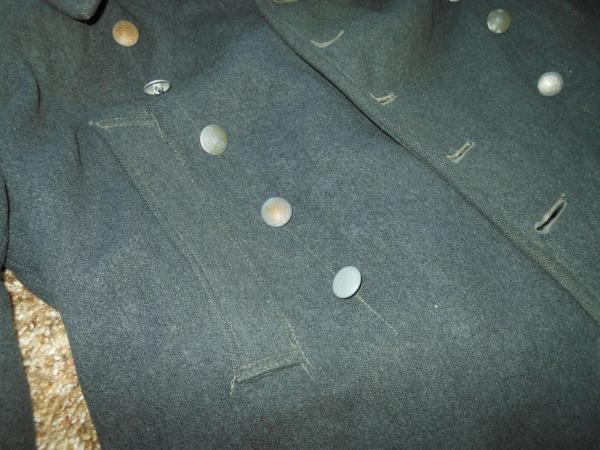
HIS COAT COLLAR PULLED TITE’ ROUND HIS NECK
HIS ROOM IS COLD AND THE BOARDS R’SPLINTERED AN’ BARE
HE SENT A NOTE HAME TO HIS MAMMY IN THA’ ‘EMAERALD’ ISLE
.
‘IT’S A WEE STRUGGLE FOR A BEER AN’ A PAIR A’BOOTS MA’
BUT HE DID MANAGE A CAP TO BUY FROM HIS CHANGE
AFTER HE HAD PAID THE MISSES DAVIDSON HIS WEEKLY LODGE
.
HE SINGS LOUDEST AT THE HIBERNIAN ON A SAT-UR-DAY NIGHT
BUT THEN MAKES SURE HE WALKS BACK WI’ ALEX N’ ARCHIE
AN’ THAT SINCE DONALD WALSH, HE GOT PUNCHED IN THA’ FACE
.
HE CAU’GHT SITE O’ THA’ SWEET LAUREN AN’ HE SMILED POLITE
SHE RETURNED THE MOMENT BUT HE IS STILL BIDING HIS TIME
HE WILL BE OFF TA’ HIS WORK ON THA’ MONDAY MORNIN’
.
HE’LL KEEP HIS HEAD DOWN AN’ WORK A FULL DAYS PAY
COS’ THE BHOY IS STILL DREAMIN’ O’ A BETTER DAY
AN’ HA’ELL NEED PLENTY A’ CASH TO PAY FORRIT.’
.
※※※
writtenbyedenbray12.11.12
※※※
..
THIS WEE SCRIBBLE IS DEDICATED TO THE MEMORY OF MY DEAR RED-HEADED GRANDMOTHER ~ ADELINE WALSH WHO WAS BORN IN Co. MONAGHAN, IRELAND ~ I AM SO VERY PROUD OF MY IRISH ROOTS - ONE DAY I WILL RETURN!THE LAST TRUE HIBERNIAN
#Authors Note – Pretty self explanatory but I will attempt a personal review. I have always enjoyed listening to regional or local accents and have often attempted to used the slang of varying dialects to add character and nuance to a written piece. Their unusual vowel sounds can sometimes add cadence and interesting rhyming potential.
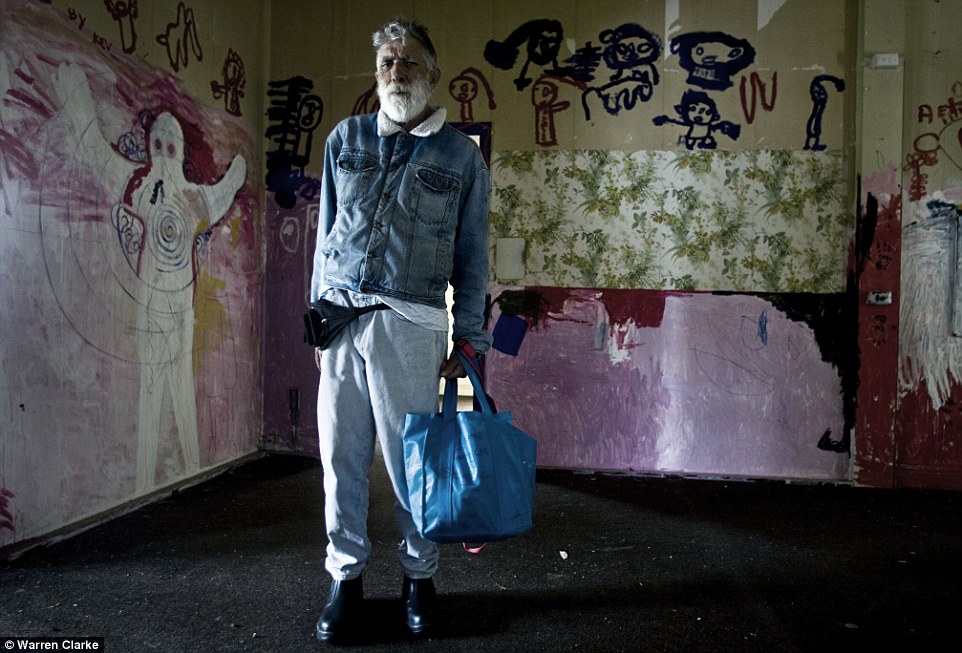
This piece is a cameo, an imagined thumbnail sketch of a young Irish ‘bhoy’ who has left his home and made the trip over the Irish sea on the ferry from his native and beloved Ireland to find work, in this case in Edinburgh in Scotland, as many young men did at times during the 19th and early in the 20th centuries in various parts of both England and Scotland.
The Hibernian Football Club, based in Easter Road, Edinburgh, began as a Social Club for Irish immigrants in the late 1800’s and this is all the necessary background needed to explain this homiletic to the life of one homesick and lonely young man that I decided to write about whence I first a heard that history.
Perhaps eventually the bhoy and the young Lauren might summon up the courage to meet and court, tie the knot and raise a young family. I do hope they did and I hope ya’ love it too dear reader – If ya’ did – leave me a ‘like’ now would ya, at the bottom of the page! Thanks!
~ebenbraytoday
Share this: